
Summary
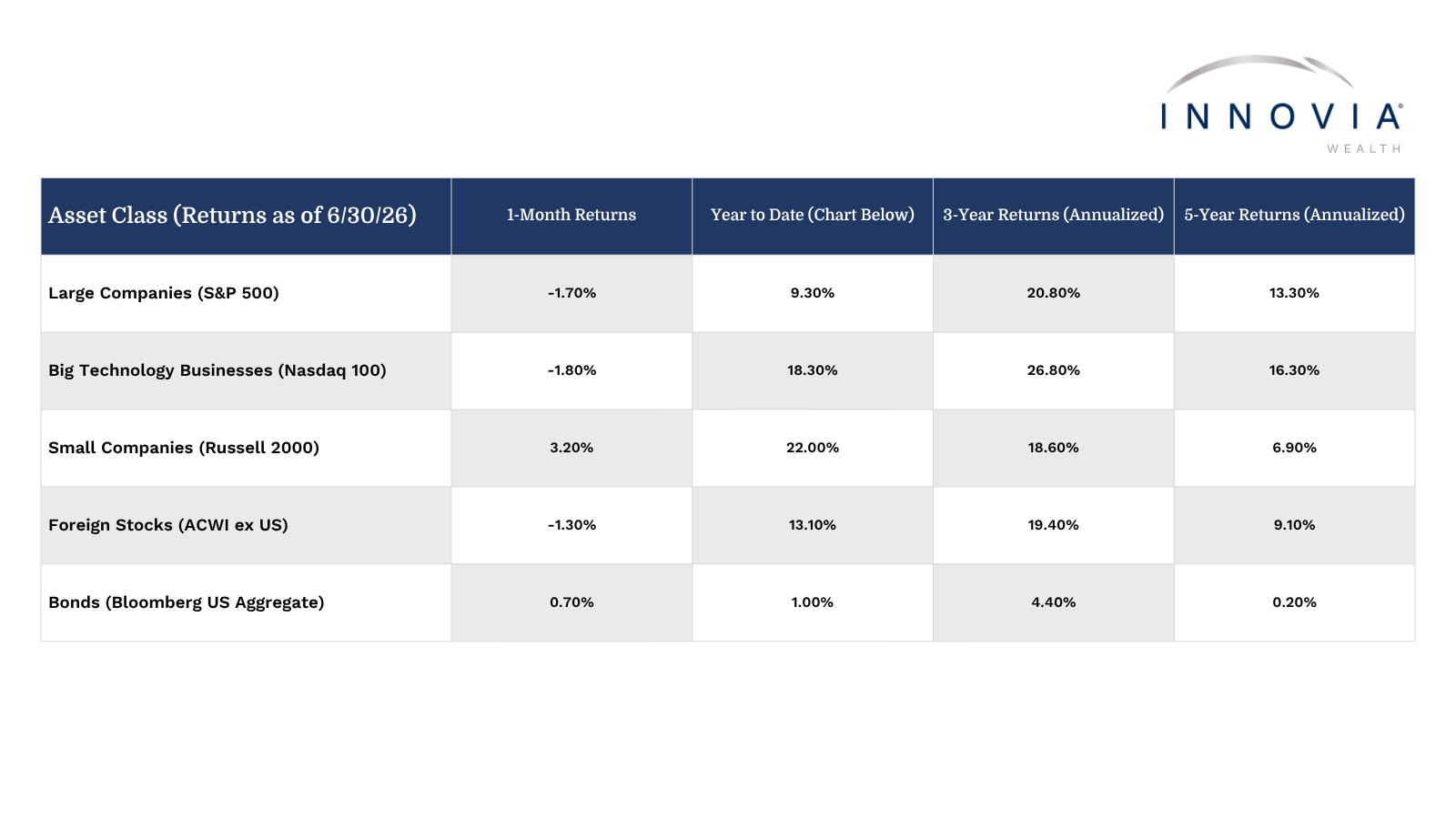
Market leadership broadened in June as gains shifted from large technology companies to smaller-cap stocks and previously lagging sectors such as healthcare and financials. We view this rotation as a healthy sign of broader market participation rather than a move away from risk.
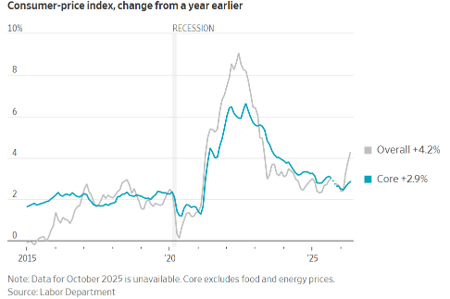
Sticky inflation and resilient economic data have increased expectations that the Federal Reserve could raise interest rates one or two more times this year, though future policy decisions remain uncertain. Meanwhile, lower energy prices and a ceasefire with Iran have helped stabilize markets. As second-quarter earnings season begins, elevated expectations for AI-related companies could contribute to increased market volatility.
Market Performance: Tech Gives Back Some Gains, Small Caps Make a Comeback
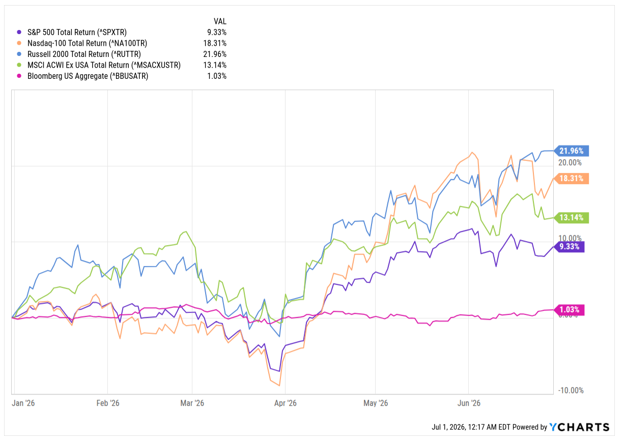
This month saw some apparent rotation out of high-flying tech stocks and into previously underperforming sectors such as financial services and healthcare. Small caps, which had also been laggards YTD, saw a large gain in performance towards the end of the quarter. We view this broadening as bullish for the overall market and the pullback in tech as healthy given the high-flying performance to date.
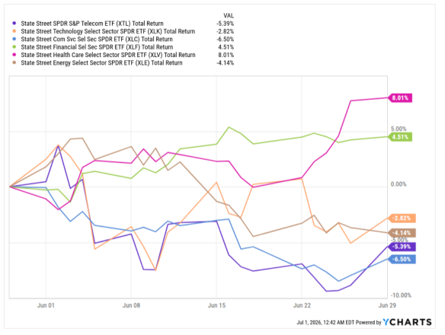
Rotation into small caps and financial services and healthcare does not appear to indicate that investors are worried about the economy or that they are taking risk off. We think this recent move is more around rebalancing portfolios that have run since the beginning of the year.
On the fixed income side, the bond aggregate was up 0.7% as glimpses of a potentially more hawkish Fed and sticky inflation have caused the yield curve to flatten somewhat with most expecting 1-2 rate hikes before the end of the year.
The Economy: A New Fed Chair and an End in Sight for the Iranian Conflict
Chair Warsh’s first FOMC meeting went mostly as expected. The Fed adopted a more hawkish tone in light of recent inflation data. Warsh declined to provide forward-looking statements and refrained from contributing a dot to the dot plot. While decreased Fed communication could spark short-term fluctuations, it may reduce long-term market volatility. Beyond inflation, the Fed is weighing strong jobs, low unemployment, and resilient housing data.
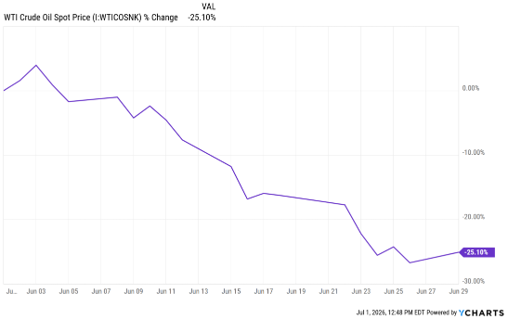
Meanwhile, energy prices eased following a ceasefire announcement with Iran and the gradual reopening of the Strait of Hormuz. While some local skirmishes continue and full shipping capacity will take time to restore, many investors appear to be looking past near-term developments in anticipation of a potential longer-term resolution, although geopolitical outcomes remain uncertain.
Earnings Outlook: Analysts are Optimistic
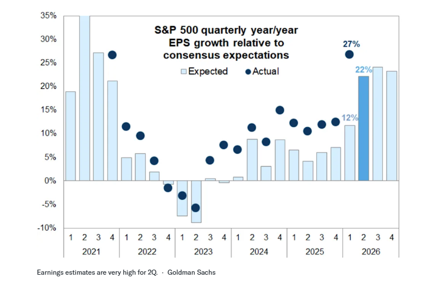
Recent earnings announcements from names like Broadcom and Cerebras suggest some sectors may be priced to perfection. Despite strong top-line results, margin compression for Cerebras and an unchanged AI chip outlook for Broadcom triggered sharp stock pullbacks. Looking ahead to July, Wall Street has exceptionally high expectations for Q2, which may leave limited room for disappointment should reported results fall short of expectations.
Investment Strategy and Outlook
Despite near-term noise and volatility in the markets, we remain steady in our long-term outlook. We reiterate the importance of diversification, disciplined rebalancing, and prudent risk management. While the market may continue to be choppy, we continue to favor a steady, long-term and strategic approach.
Given the uncertainty ahead, maintaining a diversified allocation across asset classes may continue to be appropriate for many investors, depending on their individual objectives and circumstances. We also believe certain private market strategies may offer diversification benefits for some investors; however, such investments involve unique risks and may not be appropriate for all investors.
As always, please let us know if you have any questions about the market environment or our approach to managing your investments.
Disclosures:
This content is for informational and educational purposes only. It is not intended as, and should not be considered, personalized investment advice or a recommendation to buy or sell any security. Innovia Wealth is an SEC-registered investment adviser; registration does not imply any level of skill or training. Innovia does not provide legal or tax advice—please consult the appropriate professional for those matters. All investments involve risk, including the potential loss of principal. Past performance is not a guarantee of future results. Content on this channel is intended for a U.S. audience. Advisory services are only offered to clients or prospective clients where Innovia Wealth and its representatives are properly licensed or exempt from licensure.