
What Rising Long-Term Rates Mean for Entrepreneurs
September brought interest rates back to the center of the market conversation.
On September 16, the Federal Reserve raised the federal funds target range by 0.25 percentage points to 3.75%–4.00%, its first rate increase since July 2023. The Fed pointed to solid economic activity alongside inflation that remains elevated.
That decision was only part of the story. Longer-term interest rates also moved meaningfully higher during the month as investors weighed persistent inflation, resilient economic activity, higher energy prices and the possibility that monetary policy may remain restrictive. The 10-year Treasury yield climbed above 5% late in September, while the 30-year Treasury yield reached levels not seen in more than two decades.
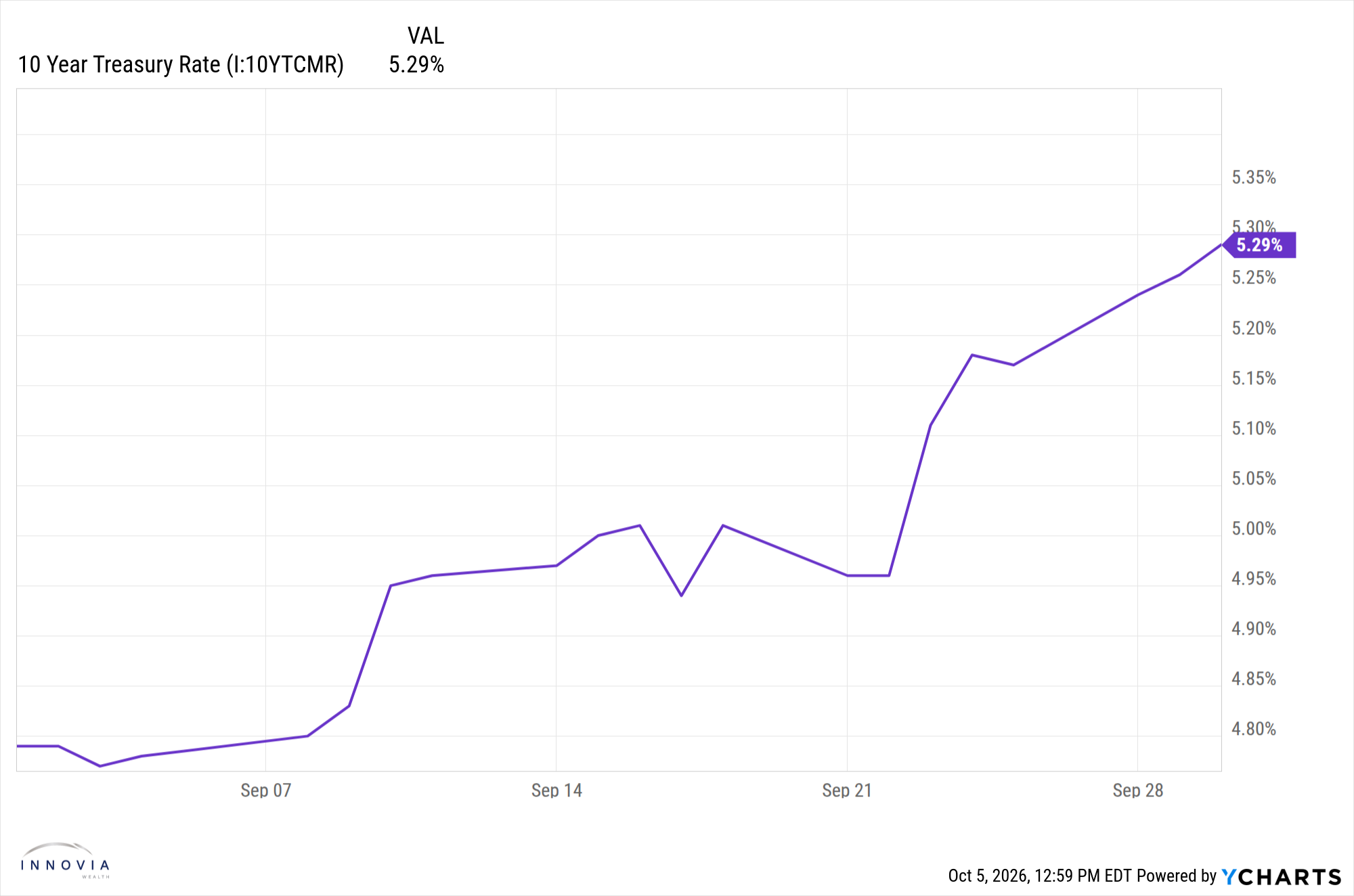
The 10-year U.S. Treasury yield moved higher during September as investors weighed inflation, economic growth and the outlook for interest rates.
For bond investors, that movement mattered. Bond prices generally move inversely to interest rates, meaning a rapid increase in yields can pressure the value of existing fixed-income investments, particularly those with longer maturities.
For entrepreneurs, higher long-term rates can reach well beyond an investment portfolio. One question we ask business owners considering a transaction is: How would the decision change if financing remains more expensive than originally expected? Higher borrowing costs can affect everything from deal economics and buyer financing to the amount of liquidity an owner wants available before and after a transaction.
Inflation and geopolitics added pressure
The Fed's decision came against a more complicated inflation backdrop.
The ongoing conflict involving Iran contributed to higher energy prices during September, with Brent crude moving above $100 per barrel during the month. By late September, rising crude and diesel prices were adding to inflation concerns and influencing expectations for the path of interest rates.
That relationship is worth watching. Energy prices can influence inflation, inflation can shape Federal Reserve policy, and expectations for future monetary policy can affect interest rates throughout the bond market.
For investors, the important question goes beyond the next Fed decision. The durability of inflation and the forces influencing longer-term rates may have a greater impact on portfolios and planning decisions than any single policy announcement.
Why long-term rates are moving
The Fed directly influences short-term interest rates, but several broader forces are affecting longer-term borrowing costs.
Government borrowing remains substantial at the same time corporations are competing for capital to finance major investments in artificial intelligence, data centers, energy infrastructure and other projects. That increased demand for capital can contribute to higher borrowing costs even when the outlook for monetary policy is uncertain.
Global markets are contributing as well. Japanese government bond yields moved higher during September, making domestic bonds more competitive for Japanese investors who have historically invested significant capital overseas. Japan remains a major holder of U.S. Treasury securities, making shifts in global capital flows another factor worth monitoring.
Together, these forces help explain why long-term rates do not necessarily move in lockstep with the Federal Reserve.
Equities remained resilient
One of the more notable aspects of September was the contrast between bond and equity markets.
While higher yields created pressure across fixed income, equities held up comparatively well through much of the month. Strong corporate earnings and continued investment in artificial intelligence helped support equity markets despite higher interest rates and energy prices.
That resilience does not make higher rates irrelevant. A higher cost of capital raises the hurdle for businesses investing for future growth. Companies with strong earnings, durable cash flows and healthy balance sheets may be better positioned to absorb those costs than businesses that rely heavily on financing.
For investors, these conditions may make selectivity increasingly important as the market adjusts to a higher-rate environment.
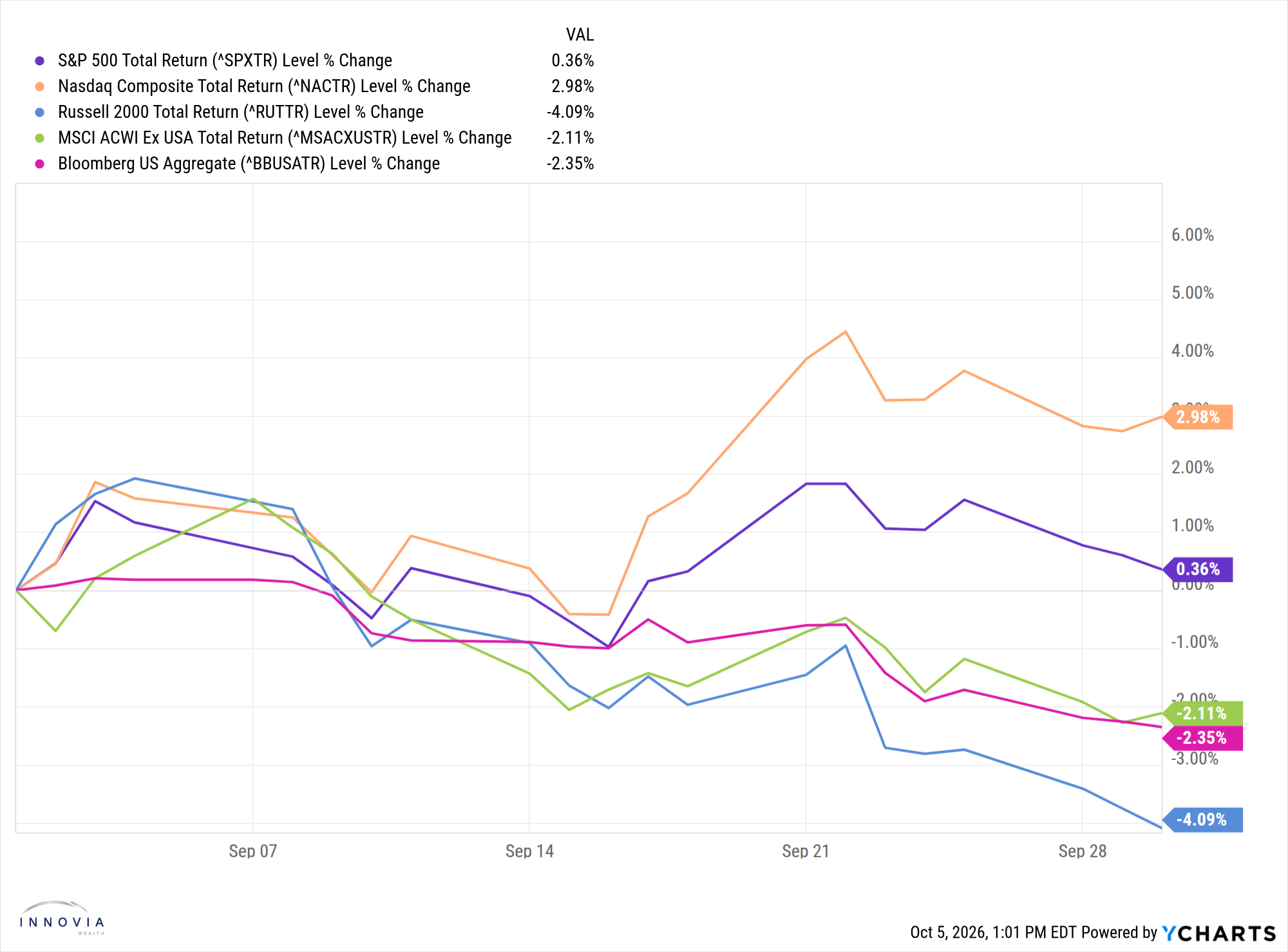
Market performance during September 2026.
Four decisions for entrepreneurs to revisit
Rising long-term rates are particularly relevant when a business transaction, major capital commitment or liquidity event is on the horizon. Rather than attempting to predict where rates go next, entrepreneurs can revisit the assumptions behind decisions already in motion.
1. Protect liquidity needed for near-term decisions
Capital expected to fund a transaction, tax obligation, business investment or other near-term commitment may warrant evaluation based on when it will actually be needed. Market volatility can create unnecessary complications when short-term liquidity is exposed to longer-term investment risks.
2. Revisit transaction financing and valuation assumptions
For owners considering a sale, acquisition, recapitalization or other transaction, higher financing costs may change the economics. It may be appropriate to review assumptions around borrowing costs, buyer financing and valuation sensitivity rather than relying on conditions that existed when the transaction was first considered.
3. Review fixed-income exposure and sources of portfolio income
A changing rate environment can affect different parts of a bond portfolio differently. Duration, maturity and credit exposure deserve consideration alongside the amount of income the portfolio is generating.
4. Evaluate equity quality
Higher financing costs can place greater pressure on companies dependent on outside capital. Balance-sheet strength, cash-flow generation and the ability to fund growth become increasingly important considerations when capital costs more.
The Innovia Perspective
September offered a useful reminder that the level of interest rates alone does not tell the entire story. The reasons behind changing rates matter.
Rates moving higher because inflation is accelerating present different challenges than rates moving higher alongside resilient economic growth and increased demand for capital. Understanding those underlying drivers helps put short-term market movements into the context of longer-term portfolio and planning decisions.
As we look ahead, we are watching:
Inflation: Whether energy costs and other price pressures keep inflation elevated.
Interest rates: Whether longer-term Treasury yields stabilize following September's increase.
Economic growth: How the economy responds as borrowing costs remain elevated.
Corporate fundamentals: Whether earnings and cash flows continue to support equity valuations.
Geopolitics: How developments involving Iran and global energy markets influence inflation and investor expectations.
For entrepreneurs, the practical takeaway is to revisit decisions that depend on the cost and availability of capital. Transaction assumptions, liquidity needs, portfolio income and investment risk may all deserve a fresh look when long-term interest rates move materially higher.
Disclosures:
This content is for informational and educational purposes only. It is not intended as, and should not be considered, personalized investment advice, a recommendation to buy or sell any security, or a solicitation to engage in any investment strategy.
The views and opinions expressed are those of Innovia Wealth as of the date published and are subject to change without notice. Forward-looking statements, including market and economic forecasts, are based on current assumptions and expectations and are not guarantees of future results.
Innovia Wealth is an SEC-registered investment adviser; registration does not imply any level of skill or training. Innovia does not provide legal or tax advice, please consult the appropriate professional for those matters.
All investments involve risk, including the possible loss of principal. Past performance is not a guarantee of future results.
Any index or benchmark performance presented is provided for illustrative purposes only. Indexes are unmanaged, cannot be invested in directly, and do not reflect the deduction of fees or expenses.
Content on this channel is intended for a U.S. audience. Advisory services are only offered to clients or prospective clients where Innovia Wealth and its representatives are properly licensed or exempt from licensure.